

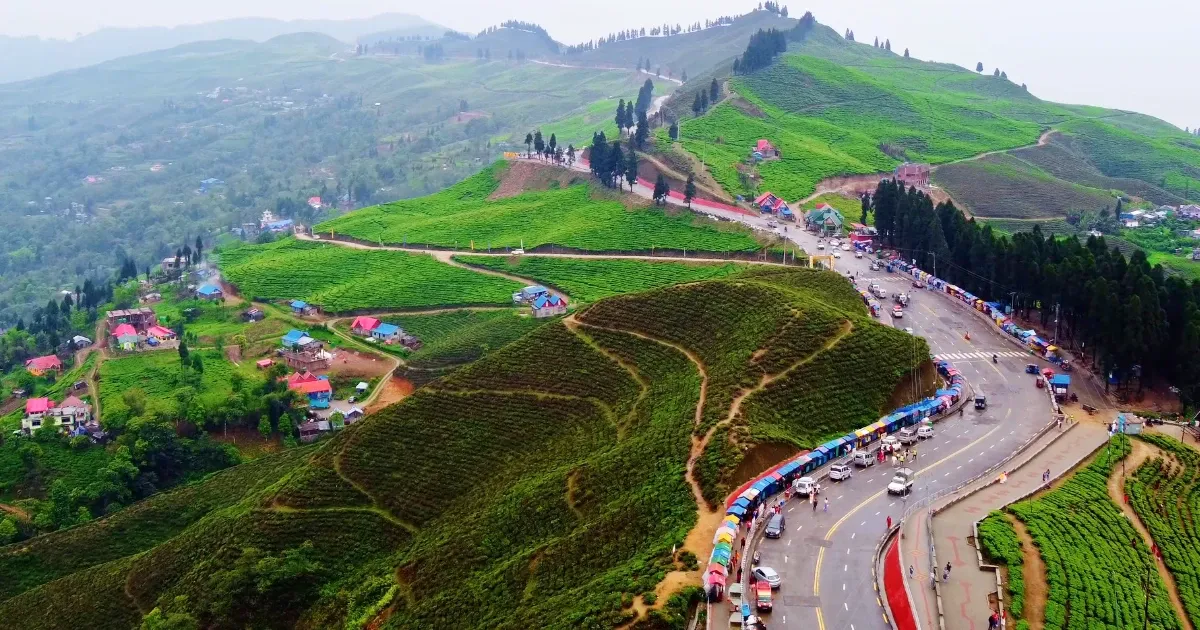
Ilam Kanyam Tea Gardens
Nepal's highest tea estate, wrapped in rolling green hills, cool mountain air, and a slower pace of life.
Quick answer: Kanyam is a tea-growing hill town in Ilam district, eastern Nepal, sitting at roughly 1,800 metres — the highest point in the district. Its tea estate spans about 240 hectares and produces around 125,000 kg of orthodox tea a year. It's reached by road via Bhadrapur Airport or Birtamod, best visited in spring (March–May) or autumn (September–November) for clear mountain views, and pairs well with nearby stops like Shree Antu sunrise point and Mai Pokhari lake.
Ask anyone who's been, and they'll tell you the same thing: Kanyam doesn't just have tea gardens — it is tea gardens, rolling out in every direction until they disappear into mist.
Tucked into the hills of Ilam district in far eastern Nepal, this small town has quietly become one of the country's most photographed places. Here's a fact-checked, practical guide to visiting it properly.
Where is Kanyam, and how high up is it really?
Kanyam sits within Suryodaya Municipality, Ilam district, in Nepal's Koshi Province. It's roughly 43 km from Ilam Bazaar and about 35 km from Charali in Jhapa — close enough to the Terai lowlands to reach in a few hours, but high enough to feel like an entirely different climate.
At an elevation of around 1,800 metres (5,900–6,000 feet), Kanyam is the highest point in Ilam district. That's worth flagging clearly, since it's often listed online at 1,400 metres — a figure that undersells just how much cooler and cloudier it gets up here.
A tea garden built on royal vision
Kanyam Tea Estate exists because of a deliberate push to put Nepal on the world tea map. The late King Birendra championed the idea, and the estate was developed with technical support from the British government — a partnership that gave Nepal's tea industry its footing in this corner of the Himalayas.
Today the estate is part of the Nepal Tea Development Corporation, run under the Triveni Group, and remains known as one of the finest of the country's seven government-linked tea gardens.
The tea grown here is orthodox tea — hand- or machine-rolled, prized for delicate, floral notes that connoisseurs distinguish from the brisker "crush, tear, curl" style common elsewhere. Ilam's climate and altitude, similar to nearby Darjeeling just across the border, are exactly what makes that flavour possible.
 The Himalayan Bulbul, a common sight around Kanyam
Things to do in Kanyam
Kanyam rewards slow travel more than a packed itinerary. Still, there's plenty to fill a day or two.
Trek to Kanyam Hill
A roughly two-hour trek rewards you with a panoramic view of the town nestled between the tea-covered slopes.
Tea Tasting & Garden Walks
Walk the rows, watch the plucking and processing up close, and taste orthodox tea fresh from the source.
Horse Riding & Photo Costumes
Try horse riding around the estate, or dress in traditional Limbu, Rai, Gurung, or Tamang attire for a photo session — a popular local tradition.
Jogmai Waterfall
A quiet picnic spot tucked inside dense forest, popular with both locals and visitors looking for a peaceful break.
Culture, festivals, and everyday hospitality
Kanyam's surrounding villages are home to Limbu, Rai, Gurung, Tamang, and other ethnic communities, each bringing their own festivals, food, and traditions into the mix. Locals are known for genuine warmth — the kind that makes a short stop turn into a long conversation over tea.
The region's biggest cultural moment is the Mai Puja festival, typically held in May and devoted to the goddess Mai, believed to protect the town from harm. Expect colour, ritual, and community celebration if your visit lines up with it.
Food here is its own kind of cultural mix — Nepali, Indian, and Tibetan influences show up side by side on local menus, with hearty hill staples like thukpa, momo, and chow mein especially welcome in Kanyam's cool climate.
A quiet paradise for birdwatchers
The forests and tea rows around Kanyam support a healthy variety of birdlife typical of the eastern Himalayan foothills. Keep an eye out for these three in particular.


Nearby attractions worth pairing with Kanyam
Kanyam works well as a base for exploring the rest of Ilam's highlands. Two spots consistently make every local's shortlist:
Shree Antu (Antu Danda)
A sunrise viewpoint at about 2,328 metres, roughly a few hours from Kanyam, with sweeping views of the eastern Himalayas including Kanchenjunga.
Mai Pokhari Lake
A sacred lake at around 2,121 metres, ringed by fir and juniper forest and considered the abode of Goddess Bhagawati — a short trip from the Antu Danda area.
Fikkal, just a short drive away, is the junction town toward Pashupatinagar and the Darjeeling border — worth a stop for its markets and tea shops even if you're just passing through.
Where to stay, and when to go
Kanyam itself has traditionally had limited formal lodging, so many visitors base themselves in nearby Fikkal or Ilam Bazaar. That said, homestays are a growing trend across the district, and more options are opening directly around the tea gardens each year.
Best time to visit: Spring (March–May) and autumn (September–November) bring the clearest skies and best mountain views. October to February is peak season for domestic picnic-goers, while the monsoon (June–August) brings heavy rain and lush, misty greenery — beautiful, but less ideal for long walks.
Sustainable tourism, done locally
Many of Ilam's tea estates, including Kanyam's, are shifting toward organic and eco-friendly cultivation. Locally led homestays and guided tours are part of a broader push to keep tourism income in the community, rather than routing it entirely through outside operators — worth supporting if you have the choice.
Frequently asked questions
How high up is Kanyam, really?
Kanyam sits at approximately 1,800 metres (5,900–6,000 feet) above sea level, making it the highest point in Ilam district — higher than the 1,400 metres sometimes quoted online.
How do I reach Ilam Kanyam?
Kanyam is accessible by road, with Bhadrapur Airport as the nearest airport. From there, it's a scenic drive up through Ilam district's hills.
When is the best time to visit for trekking?
Spring and autumn offer the most pleasant weather and clearest views for trekking around Kanyam and nearby viewpoints like Shree Antu.
Are guided tea plantation tours available?
Yes. Local tour operators and estate staff regularly offer guided walks through the tea gardens, covering plucking, processing, and tasting.
What is the Mai Puja festival?
Mai Puja is a vibrant local festival, typically held in May, honouring the goddess Mai, who is believed to protect the town. It features rituals, performances, and colourful processions.
Is there accommodation in Kanyam itself?
Formal lodging directly in Kanyam has traditionally been limited, with most visitors staying in nearby Fikkal or Ilam Bazaar — though homestays around the tea gardens are becoming more common.
Can I find vegetarian food in Kanyam?
Yes. Local restaurants cater to a range of preferences, including vegetarian and international dishes, alongside Nepali, Indian, and Tibetan-influenced hill cuisine.
Rolling hills, cool mountain air, and a cup of tea grown right where you're standing — Kanyam is Nepal's tea country at its most beautiful.

Hi! Please, Do not Spam in Comments