

Holi & Falgun Purnima Celebration in Nepal: The Festival of Colors, Joy, and Renewal

Whether you are a traveler planning your visit or a curious soul wanting to understand Nepali culture more deeply, this guide will walk you through everything you need to know about how Nepal celebrates Holi.
What Is Falgun Purnima?
Falgun Purnima refers to the full moon day that falls in the Nepali month of Falgun — typically between late February and mid-March in the Gregorian calendar. The word Purnima simply means "full moon," and in Hindu tradition, full moon days are considered highly sacred. Falgun Purnima, in particular, marks the transition from winter into spring — a time when nature herself seems to burst into celebration.
It is on this sacred full moon day that the festival of Holi is observed. In Nepal, however, Holi is not just a one-day affair. The celebration carries deep mythological roots, regional differences, and cultural layers that make it uniquely Nepali in flavor.
The Mythology Behind Holi in Nepal
Every great festival carries a story, and Holi is no exception. The most widely known legend behind Holi is the story of Prahlad and Holika. Prahlad was a devoted young follower of Lord Vishnu. His father, the demon king Hiranyakashipu, despised this devotion and repeatedly tried to kill his own son.
Eventually, the demon king enlisted the help of his sister Holika, who had a boon that protected her from fire. She sat in a blazing pyre with Prahlad on her lap, intending to burn the boy alive. But divine justice prevailed — Holika was burned to ashes while Prahlad emerged unharmed.
This story is the reason a ritual bonfire, known as Holika Dahan or Chir Dahan in Nepal, is lit the night before Holi. It symbolizes the victory of devotion and goodness over evil and arrogance.
Additionally, the playful side of Holi is deeply connected to Lord Krishna, who is said to have begun the tradition of applying colors on his beloved Radha and the Gopis of Vrindavan. In Nepal, where Krishna worship holds strong roots, this adds a deeply romantic and devotional dimension to the festival.
How Nepal Celebrates Holi Differently
One of the most fascinating aspects of Holi in Nepal is that it is celebrated on two different days — reflecting the country's cultural and geographical diversity.
In the Terai (southern plains): Communities here celebrate Holi on the same day as most of India — on Falgun Purnima itself.
In the Hills and Kathmandu Valley: Holi is celebrated one day after the Terai, i.e., on the day following Falgun Purnima. This unique tradition is rooted in historical and cultural distinctions between the hill communities and the plains communities of Nepal.
This dual celebration actually extends the joy of Holi across two days for the entire country — which many Nepalis embrace with pride.
The Chir: Nepal's Unique Holi Tradition
What truly sets Holi celebrations in Nepal apart is the Chir — a decorated bamboo pole wrapped with colorful cloth strips called Lingo. Days before Holi, a grand Chir is erected at Basantapur Durbar Square in Kathmandu, marking the official start of the Holi season.
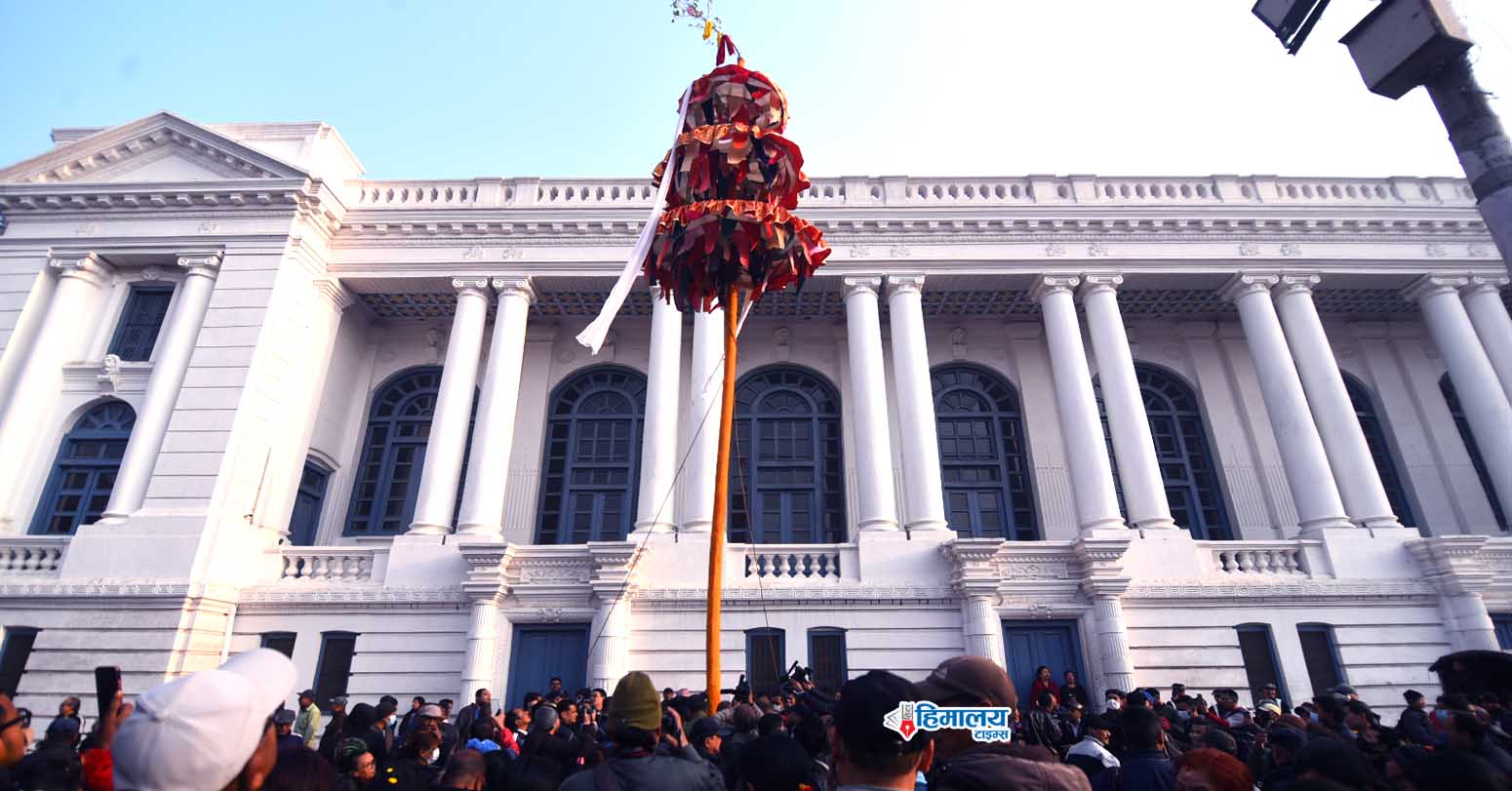 |
| Erection Of Chir In Basantapur |
On the evening of Falgun Purnima, the Chir is ceremonially brought down and burned — this is the Chir Dahan, equivalent to Holika Dahan. Families and communities gather around bonfires, offer barley grains and ritual items to the fire, and pray for protection from evil and prosperity in the coming months. The burning of the Chir is both a spiritual cleansing and a joyous send-off to the cold winter season.
The Day of Colors: What Holi Looks Like in Nepal
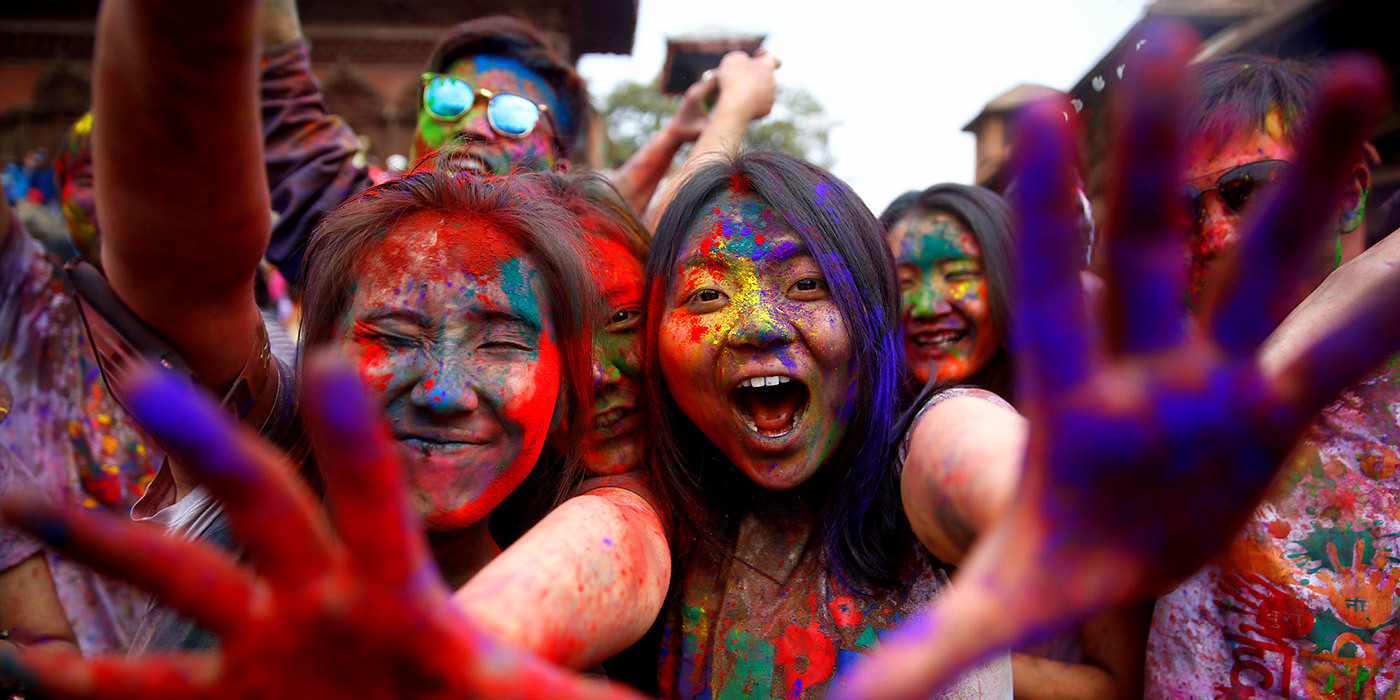
If you have never experienced Holi in Nepal, picture this: streets erupting in a rainbow of powder colors, the sound of dhol drums and festival music echoing through alleys, laughter filling the air as strangers and friends alike chase each other with water guns and color-filled balloons.
By morning, the streets of Kathmandu, Pokhara, Bhaktapur, and towns across Nepal transform into a canvas of pure joy. People smear abir (colored powder) on each other's faces, drench one another with buckets of water, and shout "Holi hai!" — meaning "It is Holi!" — with infectious enthusiasm.
Families begin the day with prayers and small rituals at home before heading out into the revelry. Sweets are exchanged among neighbors, and special Holi delicacies are prepared. Thandai, a chilled spiced milk drink, is a popular Holi beverage. In some households, traditional Nepali snacks like sel roti, anarsa, and various sweets are shared as part of the celebration.
Holi in Kathmandu: The Heart of the Celebration
Kathmandu, with its dense population and cultural richness, hosts some of the most energetic Holi celebrations in the country. Thamel — the tourist hub — becomes a legendary battleground of colors where locals, expats, and tourists from around the world come together without any barriers of nationality, language, or background. For a few hours, everyone is equal, drenched in the same colors, sharing the same joy.
Basantapur Durbar Square remains the cultural epicenter of Holi in Kathmandu. The UNESCO-listed heritage site sees massive crowds gathering for the Chir Dahan and the color festival alike. Watching the historic temples and palaces as a backdrop to a sea of colorful celebrations is a sight you will carry with you for a lifetime.
Rooftop celebrations are another signature of Kathmandu's Holi. Groups of friends gather on rooftops armed with water balloons and color powder, engaging in friendly battles with neighboring rooftops. The entire city feels like it is playing together.
The Spiritual Significance Beyond the Fun
While Holi is undeniably a celebration of fun and color, its spiritual significance in Nepal runs deep. The festival marks the arrival of Basanta (spring) and the end of the harsh winter. It is seen as a time of renewal — when the earth itself is reborn with fresh flowers, warmer winds, and new beginnings.
On a spiritual level, Holi reminds people to let go of grudges and old conflicts. It is customary to forgive those who have wronged you and to patch up broken relationships during this time. The smearing of color on someone's face is, in essence, an act of warmth and acceptance — a way of saying, "Whatever has passed, today we celebrate together."
For devotees, visiting temples dedicated to Lord Vishnu and Lord Krishna on this day carries special merit. Temples like Changu Narayan, Budhanilkantha, and Pashupatinath see a steady stream of worshippers on Falgun Purnima, offering flowers, lighting incense, and expressing gratitude for life's blessings.
Eco-Friendly Holi: A Growing Movement in Nepal
In recent years, there has been a meaningful shift in how many Nepalis approach Holi. Environmental awareness has sparked a growing movement toward organic and natural colors made from flowers, turmeric, sandalwood, and other plant-based sources. These are gentler on the skin, safer for children, and kinder to the environment.
NGOs, schools, and youth groups across Nepal have been actively promoting eco-friendly Holi campaigns — reducing plastic waste from water balloons, using dry colors instead of chemical-laden wet colors, and keeping public spaces clean after the celebration. This reflects a beautiful balance between preserving a beloved tradition and caring for the world it is celebrated in.
Tips for Experiencing Holi in Nepal
If you are planning to experience Holi in Nepal for the first time, a few thoughtful preparations will make the experience far more enjoyable.
Wear clothes you do not mind ruining, because no outfit survives Holi. Protect your phone and camera in waterproof pouches. Apply a generous coat of oil or moisturizer on your skin and hair before stepping out — it makes washing off the color much easier afterward. Keep your eyes and mouth protected as much as possible when colors are being thrown.
Most importantly, step into the celebration with an open heart and a sense of humor. Holi is one of those rare occasions when the usual formalities of social life fall away, and people simply connect as human beings through the universal language of joy.
Final Thoughts
Holi and Falgun Purnima in Nepal are far more than a festival of colors — they are a celebration of life itself. They remind us that winter always gives way to spring, that darkness is always overcome by light, and that joy is most beautiful when it is shared freely with those around us.
Whether you witness the spiritual solemnity of the Chir Dahan at Basantapur, dance to festival music in the streets of Thamel, or simply enjoy a quiet Holi at home with family and friends, the essence of this festival will touch you in ways that go beyond any color you might wear on your skin.
Happy Holi! May your life always be filled with the brightest of colors.

Hi! Please, Do not Spam in Comments