


Gufa Pokhari —
The Sacred Pond
of Eastern Nepal
At 2,890 metres, where the Tinjure Milke Jaljale trail crests through cathedral forests of rhododendron, a small sacred pond has drawn meditating priests, migrating monal, and quiet trekkers alike for generations.
A Pond That Holds a Name's Whole History
Gufa Pokhari sits within the enchanting landscapes of Gufa VDC, Sankhuwasabha District, in the eastern reaches of Nepal. Perched at 2,890 metres above sea level, this pristine sanctuary captivates visitors with a rich tapestry of flora, fauna, and ancient heritage — a place where natural beauty and cultural significance are genuinely inseparable.
The name itself carries a history. In the 20th century, this site was known as Siddha Marga Pokhari. Priests seeking solace in meditation within the surrounding hill caverns later renamed it Gupha Pokhari — meaning "Cave Pond" — a change that reflects the spiritual practice that has defined this place for centuries.
Gufa Pokhari — Quick Reference
- Location
- Gufa VDC, Sankhuwasabha
- Elevation
- 2,890 metres
- Original name
- Siddha Marga Pokhari
- Meaning
- Gupha Pokhari = "Cave Pond"
- Trail
- Tinjure Milke Jaljale (TMJ)
- Mountain views
- Makalu & Kanchenjunga
- Communities
- Sherpa, Limbu, Tamang
- Best seasons
- Feb-May (bloom); Nov-Dec (snow)
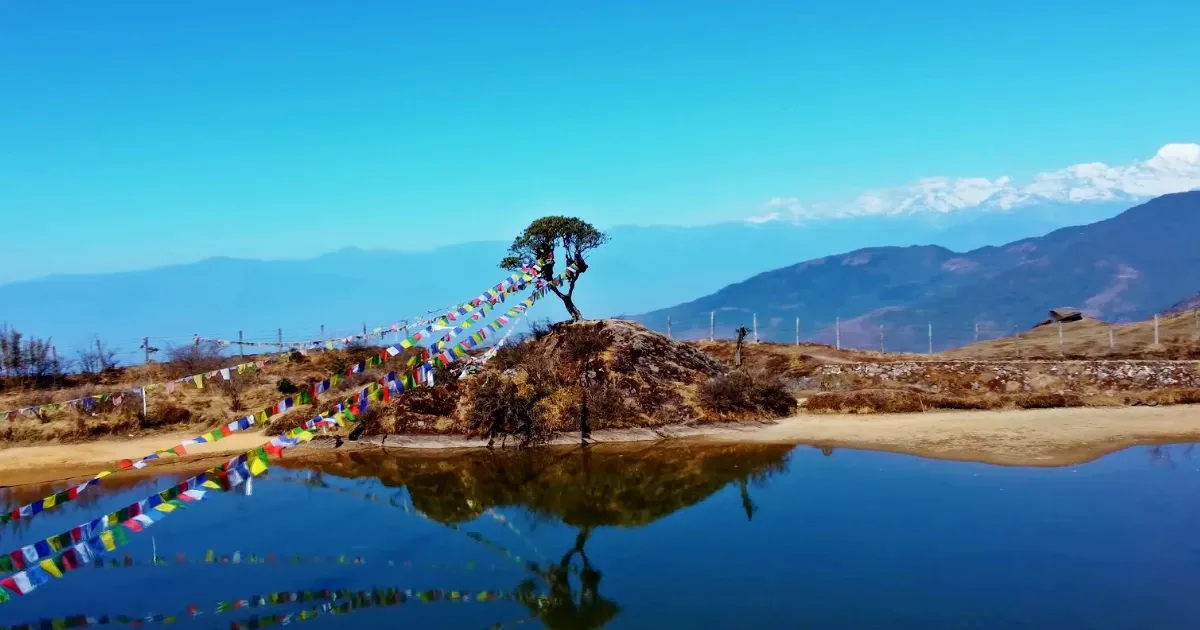
The Cave Ponds: Sacred Retreats
Centuries of Meditation and Retreat
Central to the cultural fabric of Gufa Pokhari are the sacred cave ponds — "gufa pukhu" in Nepali. These ponds, surrounded by caves, have served as sacred spaces for meditation and spiritual practice for centuries, adding a profound spiritual dimension to what might otherwise be seen simply as a scenic mountain lake. Local guides today offer tours that share the spiritual significance of these caves and the meditation traditions still connected to them.
What makes Gufa Pokhari distinctive on the wider TMJ (Tinjure Milke Jaljale) trail is this layering of the sacred onto the scenic. Trekkers arrive for the mountain views and the rhododendron forests, and find themselves standing at a site with genuine, centuries-deep spiritual weight — a place priests once sought out specifically for its solitude and stillness.
Rhododendron Bloom: A Riot of Colours
Gufa Pokhari hosts a vibrant display of rhododendron species, creating a mesmerising riot of colour each spring. Between February and May, the landscape transforms into a picturesque panorama of crimson, pink, and white blooms — one of the finest natural spectacles anywhere along the broader Tinjure Milke Jaljale corridor, itself renowned for its rhododendron forests.
The magic of Gufa Pokhari is not a one-time experience but a tapestry of moments waiting to be discovered — whether you are drawn to the vibrant hues of spring, the serenity of sacred retreats, or the thrill of trekking.
A Birdwatcher's Paradise and Rich Biodiversity
The forests and skies around Gufa Pokhari support some of eastern Nepal's most captivating wildlife.
Himalayan Monal
Nepal's national bird graces the skies here, its iridescent plumage a highlight for any birdwatcher's visit.
Himalayan Griffon
These large vultures soar on thermals above the ridgelines, visible on clear days circling high overhead.
Yellow-Billed Blue Magpie
Striking blue-and-white plumage with a long tail — a common and photogenic sighting near the forest edges.
Musk Deer & Barking Deer
Two of the region's characteristic forest mammals, both adapted to the mid-to-high elevation habitat around the pond.
Himalayan Black Bear
An elusive but confirmed resident of the forested slopes surrounding Gufa Pokhari, rarely seen but part of the area's genuine wild character.
Diverse Flora
Beyond rhododendrons, the region hosts a wide range of plants and wildflowers across its varied elevation bands.
A Melting Pot: Sherpa, Limbu, and Tamang
Gufa Pokhari is not just a canvas of natural wonders — it is a genuine meeting point of three distinct Himalayan cultures.
Sherpa Communities
Known internationally for mountaineering heritage, Sherpa families in this area maintain Tibetan Buddhist traditions alongside daily agricultural and trekking-support livelihoods.
Limbu (Yakthung)
The Limbu community brings the Kirat Mundhum oral tradition and its own distinct language, festivals, and cuisine to the cultural mix around Gufa Pokhari.
Tamang Heritage
One of Nepal's largest indigenous nationalities, Tamang communities here contribute their own festival calendar and material culture to the region's diversity.
Gufa Pokhari's cultural richness is further highlighted during local festivals. Traditional dances, rituals, and celebrations provide visitors with a genuine glimpse into the vibrant heritage of the Sherpas, Limbus, and Tamangs who call this region home. Participating in these festivities creates lasting memories and fosters a deeper connection with the local culture than a simple pass-through visit ever could.
A Pivotal Point on the Tinjure Milke Jaljale Trail
Gufa Pokhari is a pivotal waypoint on the Tinjure Milke Jaljale (TMJ) Trail, one of eastern Nepal's most rewarding and increasingly popular trekking routes. On clear days, trekkers are treated to breathtaking views of Makalu and Kanchenjunga — two of the world's highest peaks, visible together from the ridgelines around the pond.
The trek's duration varies depending on the chosen route and pace, but a typical TMJ circuit including Gufa Pokhari takes around five to seven days to complete. The trail offers both a visual feast of Himalayan scenery and a genuine chance to immerse in the local culture along the way — not simply pass through it.
Suitable for all levels: Gufa Pokhari offers trekking options suitable for both novice and experienced trekkers. Local guides can tailor the experience based on skill level, making it accessible for families with children as well as more seasoned hikers.
Best Times to Visit
Two very different seasonal experiences await, depending on what draws you to Gufa Pokhari.
Spring · Feb-May
Rhododendrons burst into a symphony of colour, the weather is pleasant, and the landscape is adorned with vibrant blossoms — ideal for nature lovers and photography enthusiasts.
Winter · Nov-Dec
Gufa Pokhari transforms into a snowy wonderland. Snow trekking, snowboarding, and skiing become popular activities against a serene white Himalayan backdrop.
Spring & Early Summer
While the Himalayan monal is present year-round, spring and early summer offer the best conditions for birdwatching more broadly across the region.
Adventure Activities in Abundance
Trekking is the headline activity, but Gufa Pokhari's biodiversity and terrain support a genuinely wide range of experiences.
Beyond trekking, Gufa Pokhari offers birdwatching and wildlife photography opportunities shaped by the region's rich biodiversity. The surrounding hills also offer excellent terrain for those seeking a bit more adrenaline, including rock climbing and paragliding. Local guides — often community members with intimate, generational knowledge of the region's flora, fauna, and cultural nuances — add a genuine layer of authenticity to any visit, well beyond what a self-guided trip could offer.
Where to stay: Accommodations near Gufa Pokhari range from guesthouses to lodges catering to visitors seeking a comfortable stay amidst nature. The nearest airport is in Bhadrapur, with road access completing the journey to the site itself.
Frequently Asked Questions
What is Gufa Pokhari?
Gufa Pokhari is a sacred pond and natural sanctuary located in Gufa VDC, Sankhuwasabha District, eastern Nepal, at an elevation of 2,890 metres. Known as "Cave Pond" in Nepali, it is a pivotal waypoint on the Tinjure Milke Jaljale (TMJ) trekking trail, famous for rhododendron forests, sacred meditation caves, and a mix of Sherpa, Limbu, and Tamang culture.
How can I reach Gufa Pokhari?
Gufa Pokhari is accessible by road, with the nearest airport located in Bhadrapur. Most visitors combine the journey with the wider Tinjure Milke Jaljale (TMJ) trekking circuit.
Why is it called Gufa Pokhari or Gupha Pokhari?
The site was originally known as Siddha Marga Pokhari. In the 20th century, priests who used the surrounding hill caverns for meditation renamed it Gupha Pokhari, meaning "Cave Pond" in Nepali — a name that reflects the sacred meditation caves at the site.
What is the best time to visit Gufa Pokhari?
February to May is best for rhododendron blooms and pleasant weather, while November and December bring snow suitable for snow trekking, snowboarding, and skiing. Spring and early summer are also the best months for birdwatching.
What is the duration of the Tinjure Milke Jaljale trek including Gufa Pokhari?
The trek typically takes around five to seven days to complete, depending on the chosen route and pace.
What wildlife can be spotted around Gufa Pokhari?
The region is home to musk deer, barking deer, and the elusive Himalayan black bear. Birdwatchers can spot the Himalayan monal, Himalayan griffon, and yellow-billed blue magpie among many other species.
Is Gufa Pokhari suitable for families and novice trekkers?
Yes. Gufa Pokhari offers trekking options suitable for both novice and experienced trekkers, and local guides can tailor the experience to accommodate families with children and various skill levels.
Can I visit the sacred cave ponds with a guide?
Yes, local guides offer tours of the cave ponds, providing insight into their spiritual significance and the meditation traditions connected to the surrounding caves.

Hi! Please, Do not Spam in Comments